01GamesGodot 4.7 · GDScript · top-down
Pillars of Control
A social strategy game about four roles competing for control of one town, designed as a four-player multiplayer match of cooperation, deception and structural dominance.
In development
One town, four kinds of power
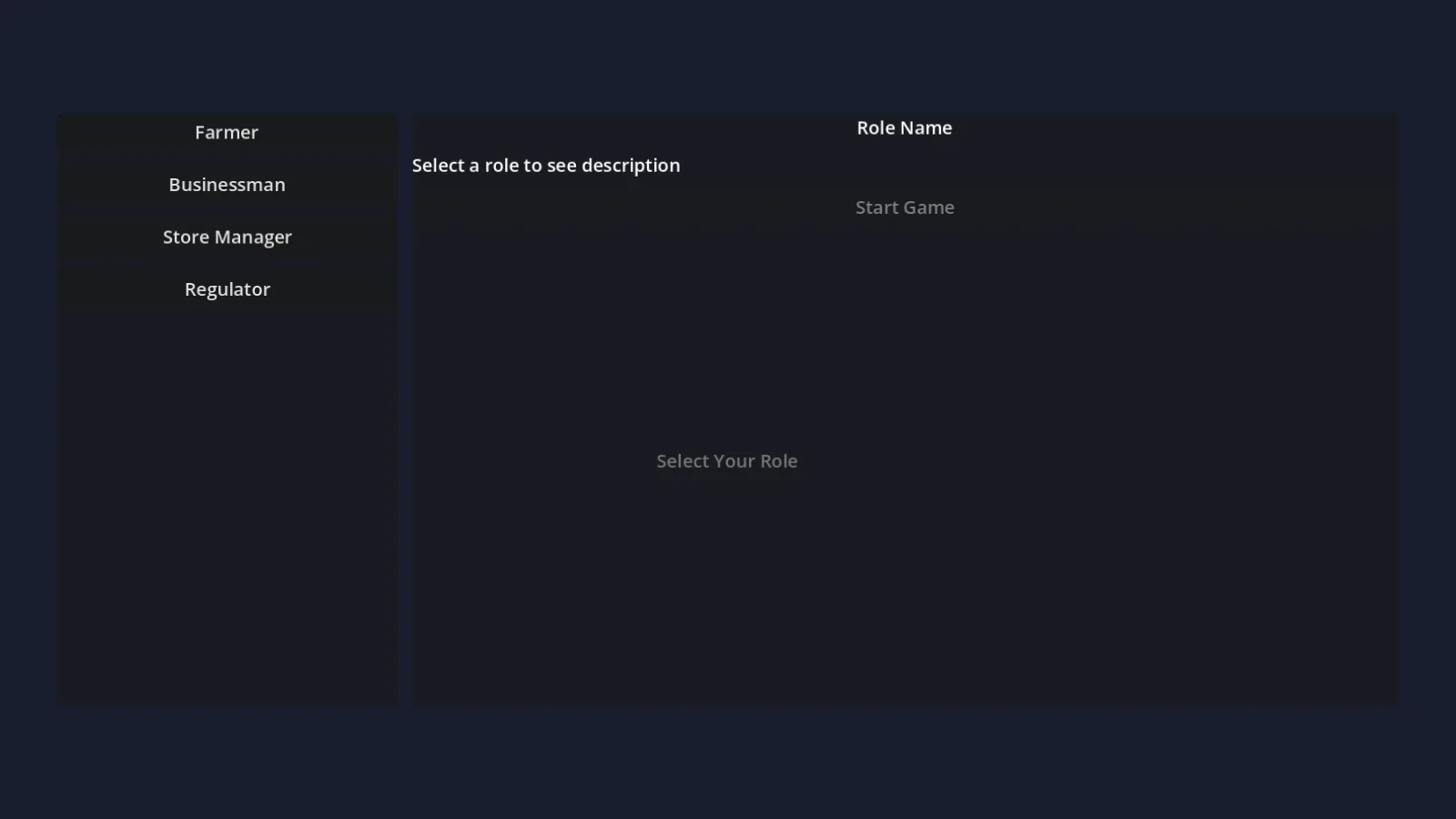
The design document frames the four roles as controllers of different systems: the Farmer controls supply, the Businessman controls capital and market access, the Store Manager controls information and financial records, the Regulator controls the rules themselves.
Nobody wins by scoring points. Each role has its own Power Victory condition, from controlling the food routes to owning the legal system and the public narrative, and the endgame adds Power Plays: corporate takeover, political coup, supply monopoly, engineered financial collapse.
Perception as a game system
Every player carries a visible reputation score and a hidden conduct score, and the gap between them is where the game lives: smear campaigns, anonymous tips, loyalty tests, staged events and sold reputation services all push the visible number around.
Market events (shortages, health scares, festivals, crime waves) bend the economy so each role has moments of leverage, and the evidence system makes lawsuits a gamble: real, fake, incomplete and misleading evidence all exist, and a failed lawsuit can bankrupt the plaintiff.
Engineered like software, not like a demo
The UI is code-driven and the game logic runs through custom systems written for this game specifically, so behavior stays inspectable while the design changes.
Art is deliberately placeholder-grade behind a swappable pipeline; static analysis passes and bug fixing are part of the current development loop.
What makes it technically interesting
- Designed around four competing roles, each a different kind of power: Farmer as supply controller, Businessman as capital controller, Store Manager as information controller, Regulator as legal controller
- Walkable top-down world with six explorable locations
- Interlocking economy, reputation and espionage systems: a visible public reputation score runs alongside a hidden actual-conduct score, and the two are not the same
- Dynamic policy layer: food standards, tax rates, surveillance legality and contract enforcement can all change mid-game through the Regulator’s tools
- Black market options for every role: off-the-books sales, fake invoices, forged documents, planted bugs, sting operations; lawsuits run on evidence that can be real, fake, incomplete or misleading
- Code-driven UI and custom game-logic systems instead of off-the-shelf templates; placeholder asset pipeline kept deliberately swappable; ongoing static-analysis and bug-fixing passes